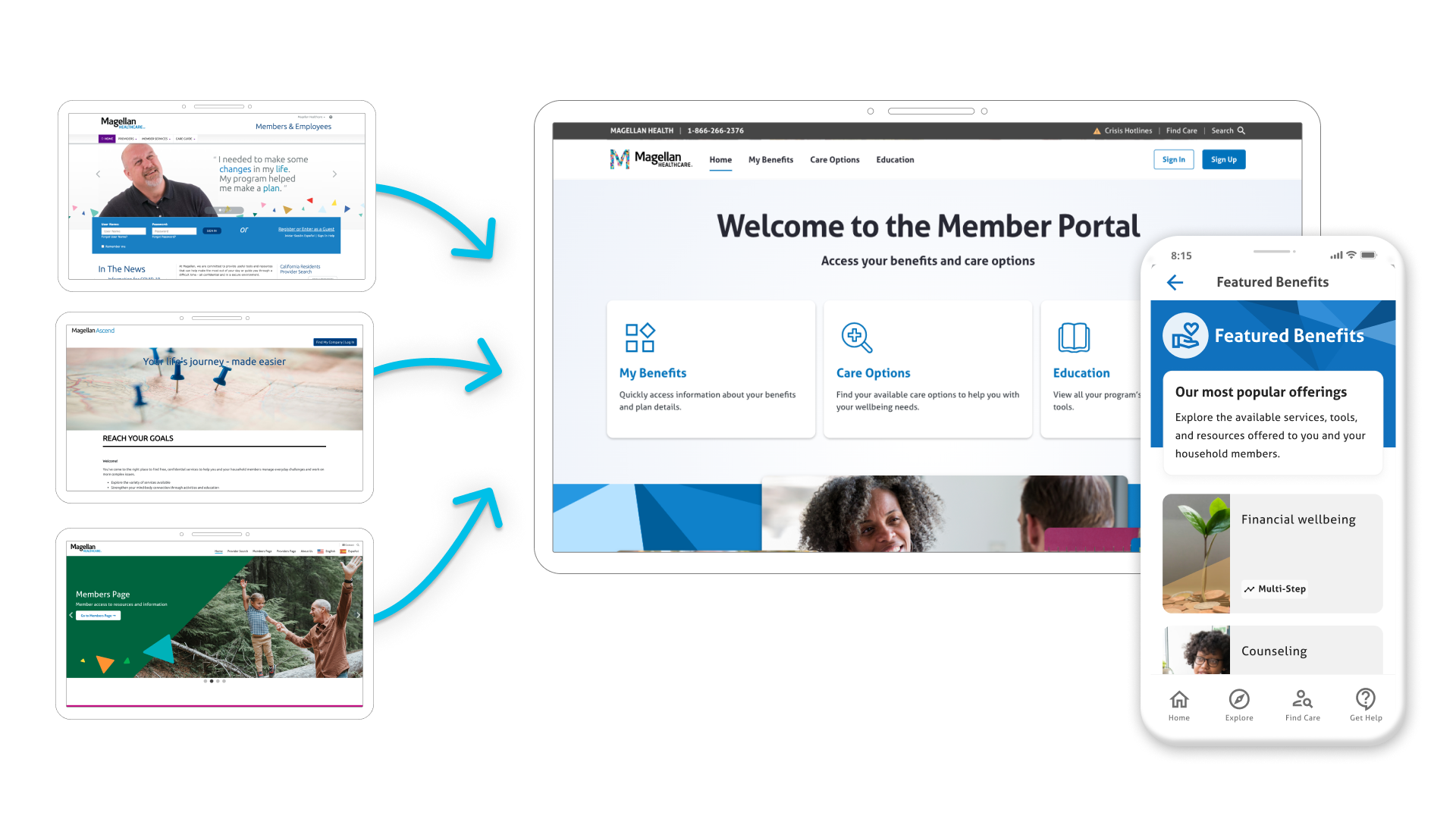
Converting 3 legacy portals into one personalized platform.

We migrated multiple enterprise platforms to a modern platform that simplifies our tech stack and offers our members a more personalized experience.

This case study generalizes data and internal details. Metrics are approximate and provided for illustrative purposes only.

Overview

Role

Senior UX Designer

Team

Product Manager, Developers, Growth and Sales, Clinical, Agency Designers, and Marketing teams.

Timeline

2 Years of ongoing design and development with milestones for each product release.

Tools

Miro, Figma, Excel, LifeRay DXP, Google Analytics, and Qualtrics Surveys.

Project Type

Digital Transformation and Web Migration

Problem

The enterprise had accrued multiple web platforms overtime to power it's member digital experiences across multiple business segments. Maintaining and updating them was expensive, difficult, and no longer viable.

We needed to build a new modern platform that was flexible, and scaled as our business grew and transformed. The platform would need to support complex content management systems, integrated health applications, personalized experiences, and it all needed to be measureable, accessible, and secure.

The Business Problem

Our IT costs and operations to support 3 platforms had become unsustainable. We needed a modern solution to power our digital products and create a foundational platform that would transform the rest of our digital enterprise. We had thousands of clients across our legacy platforms with varying configurations and features that would all need to be accounted for in the process.

The User Pain

Members found our website confusing, and difficult to find resources. We had 3 different places members may be directed to based on their organization's marketing strategy, and the resources were served in animated carousels that made it difficult to find without many interactions. Our goal was to make finding resources intuitive, easy, and fast, no matter what the member need is.

Project Goals

The goal was to ensure we migrated off our legacy platforms as fast as possible to reap the benefits of the consollidated technology and teams. Much of this was dependent on contractual obligations, requirements, and navigating other enterprise initiatives while balancing this transformational effort.

  • Execution & Delivery : Migrate all customers to new platform within 2 years.
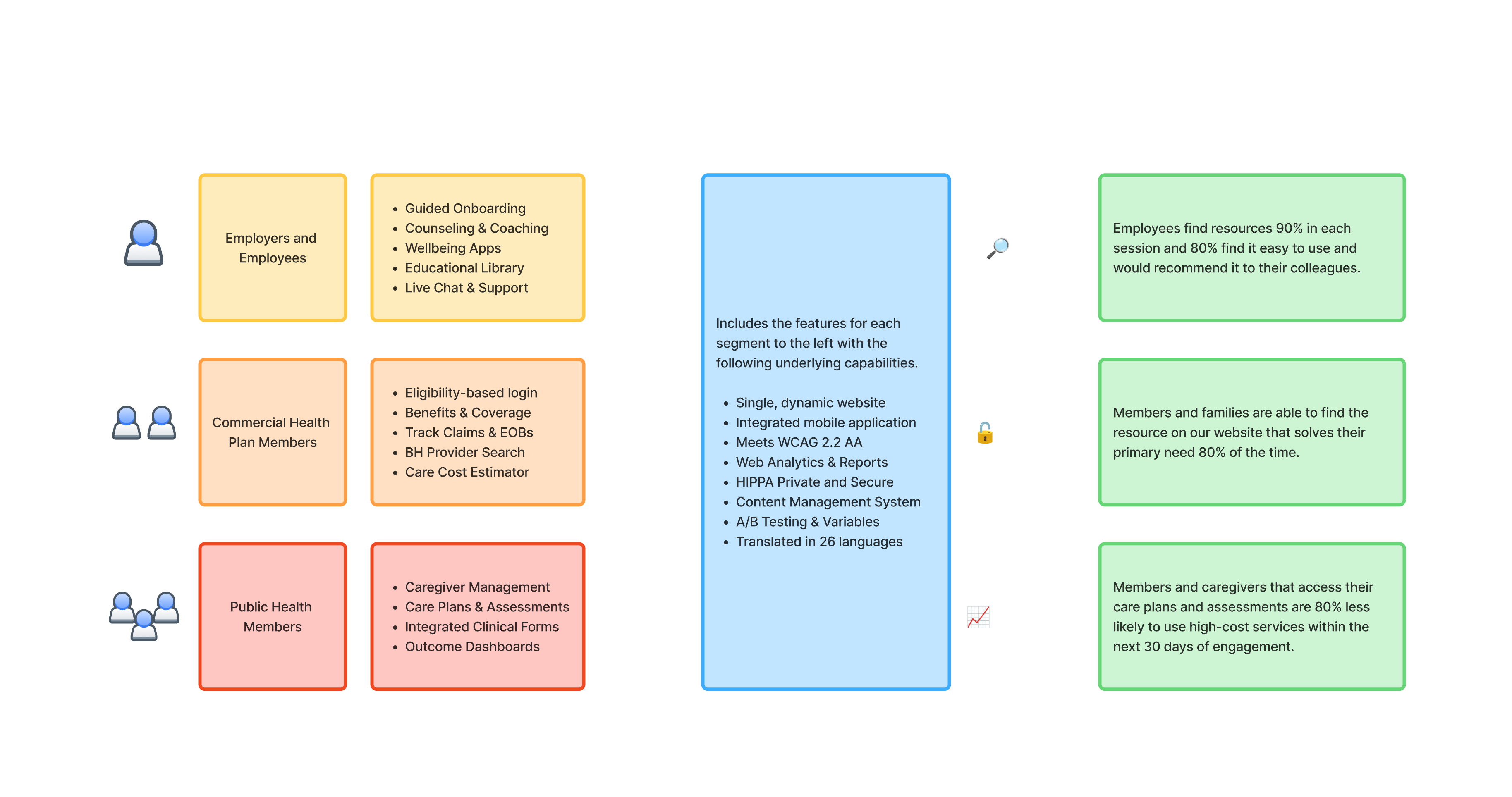
  • Personalization: Build 5 personalized product experiences that align with their business goals and customer requirements in a single digital experience platform.
  • Scaleable: Ensure the platform is built with capabilities that can easily be iterated with new functionality, accessibility, integration, and usability enhancements.

Approach

We conducted an audit of each legacy platform to understand the key features and experiences that each offered. From there, we were able to identify custom capabilities that our new platform didn't offer, along with other enhancements necessary to satisfy design systems, content management flows, and custom applications built specifically for contractual purposes.

Frameworks & Deliverables

We completed the following initiatives to establish our go forward strategy:

  • Audit and Analysis: By reviewing 3 sites with over 3k pages and 30 features, were able to document functionality requirements and convert them into Jira Epics and Stories for product discovery.
  • Design System: After thorough analysis, we were able to design and validate a cohesive design system that supported both content management systems, and interactive applications that aligned with our brand and accessibility standards.
  • Product Segment Strategy: Once all requirements were captured and converted into measurable efforts, we were able to create a strategic road map to build out each product experience through a series of iterative milestones.
  • Core Experience: We needed to build a foundational experience on our digital experience platform to begin enhancing and scaling overtime with new products and features to support our strategy in a scaleable way.

Key Discovery Insight

While deciding which product to start with, our Growth office introduced a new employee product that included prescribed requirements from the sponsoring 3rd party vendor. We knew the other products required different experiences and capabilities, so it was critical we found ways to build on top of one another, while still maintaining the integrity of the digital experience platform.

Cross-Functional Collaboration

Key leaders and stakeholders across the enterprise showed up, and shared feedback on the relevant product experiences we were designing, validating, and building. We succesfully released the first core experience for our employee product, and our customers, sales teams, and leadership couldn't have been more excited and proud. This was one of the most fun and collaborative project I had ever been a part of.

Solution

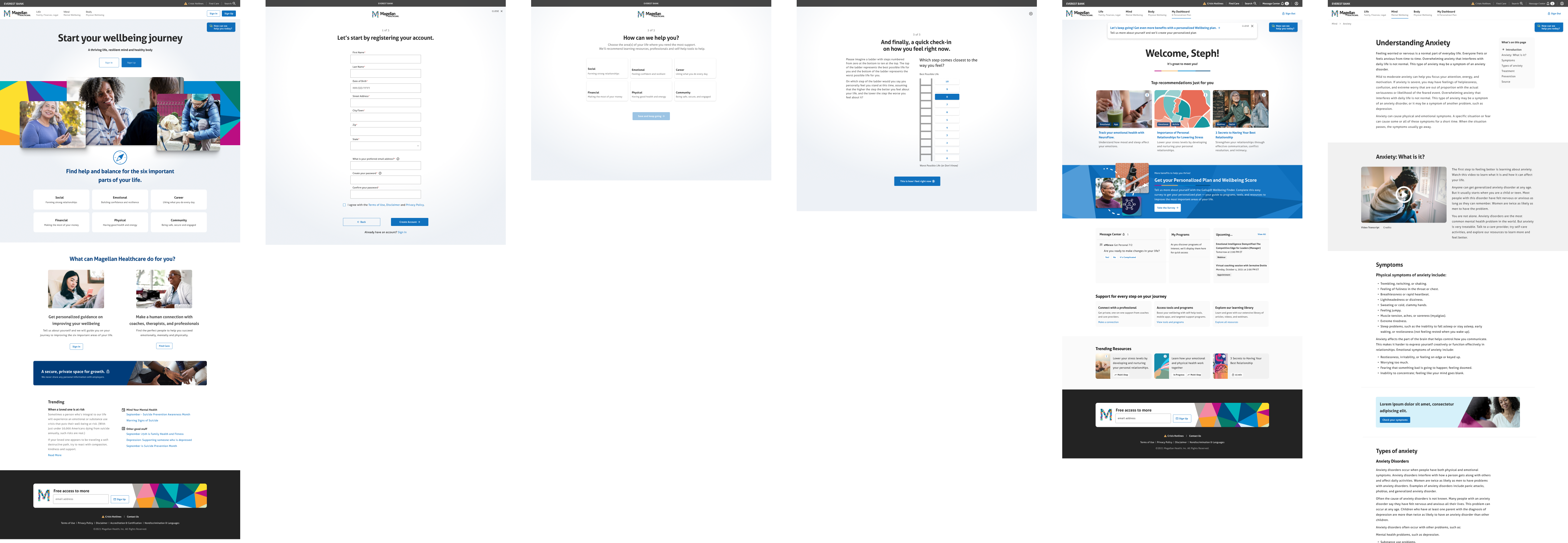
By leveraging our design system, and supporting the development and scrum teams, we quickly had the first iteration of the new member portal live and ready to onboard our customers. The roll out was a success and and we monitored user activity and feedback while we began building out our other product experiences.

We quickly learned that the new employee product was full of friction points that were caused by its own forced requirements. We knew that the rest of the product experiences had to break away from this pattern, and focus on providing fast and easy access to the resources based on the members differing needs.

The Core Design

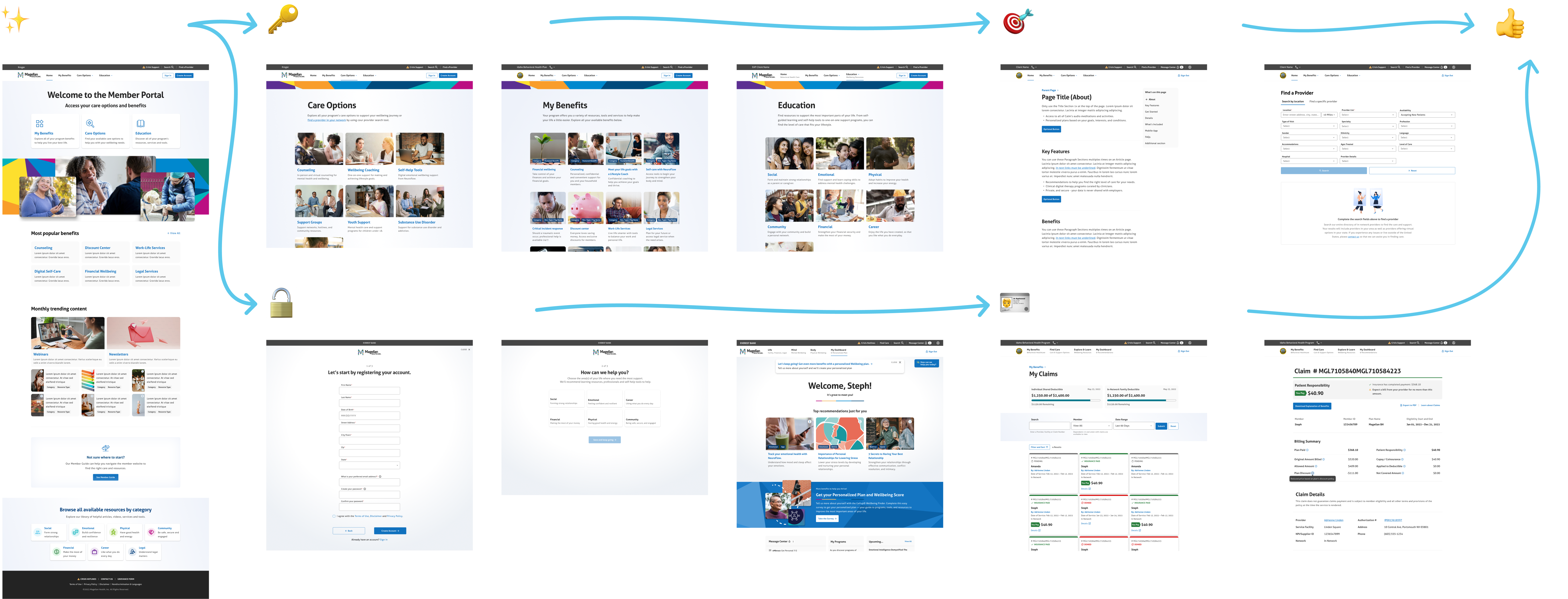
We designed 3 new core experiences for employees, commercial health, and public health members based on the first product experience. We identified all the friction points that had been collected since the initial release and removed all the barriers we could find. Instead of leading visitors to sign up, onboard, and get personalized recommendations, we restructured our website to be simple and provide direct access to their resources and benefits.

Key Artifacts

We created the new product experiences by cloning the entire site map from the first product release in Figma, and iterating on it to remove issues, and enhance with additional functionality. From there, we completed marketing and stakeholder review, and converted the designs into structured files that aligned with our development teams agile sprint schedule and linked each new epic with a dedicated Figma file. This made it extremely efficient and easy to build, QA and release the designs in a way that directly aligned with our strategic road map.

Measurable Improvement

We supported the development of each new product experience, and at the same time, monitored user activity and feedback of existing users. This allowed us to make foundational enhancements to all experiences, and identify enhancements for future product experiences and road map initiatives.

Results

By the time we rolled our final product segment, we were seeing 3x less negative feedback in our surveys and improved access to key resources.

Execution & Delivery

We were able to migrate all customers to the new member portal within our estimated time frame even after multiple requirement changes, and strategical pivots thanks to our collaboration with product, development, and scrum teams. We even made iterative enhancements along the way.

Personalization

Our site included 5 key experiences, that could be managed at the page level by using 'segmented experiences'. This made it easy to maintain from a tech perspective, but also easy to track and monitor from the member's journey.

Scaleable

Now that we had built the member portal out in a dynamic way, we have been able to do things in hours, that used to take our teams months. We continue to monitor, iterate, and build upon the member portal and even built an integrated mobile app that can be used for users that prefer.

Learnings

This case study could have been broken into many for each new product segment we built for, but there was one key lesson I learned throughout it all. It was that we should have spent less time designing, engineering, and optimizing around requirements that were inherited from legacy portals (lift-and-shift) and contractual requirements that were not wanted by end-users or advanced our product strategy.

In the moment, it felt like we were doing our best to make the most of the business requirements that we didn't feel like were necessary. However, we soon realized that our website wasn't organically used as we expected. Members used the phone number on the back of their ID cards and didn't always know about our portal. Those that did find our site, were able to find what they needed, but it wasn't that helpful due to other issues related to our legacy backend systems.

If I were to reimagine the work, I may have started with analyzing how members engage with our organization, instead of what the website needed to do. I may have started with improving the quality of our provide search tool and network, before creating onboarding experiences if most members just wanted to find a provider. This deeper level thinking is what I gained the most from this initiative. It has already, and will continue to shape the strategy behind my work going forward.