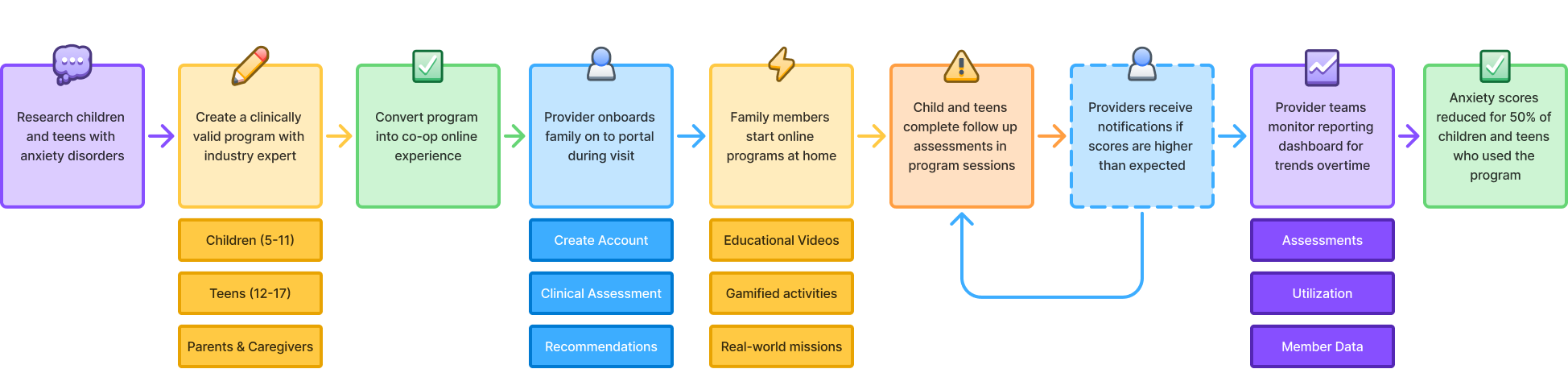
Reducing anxious symptoms for 50% of kids and teens.

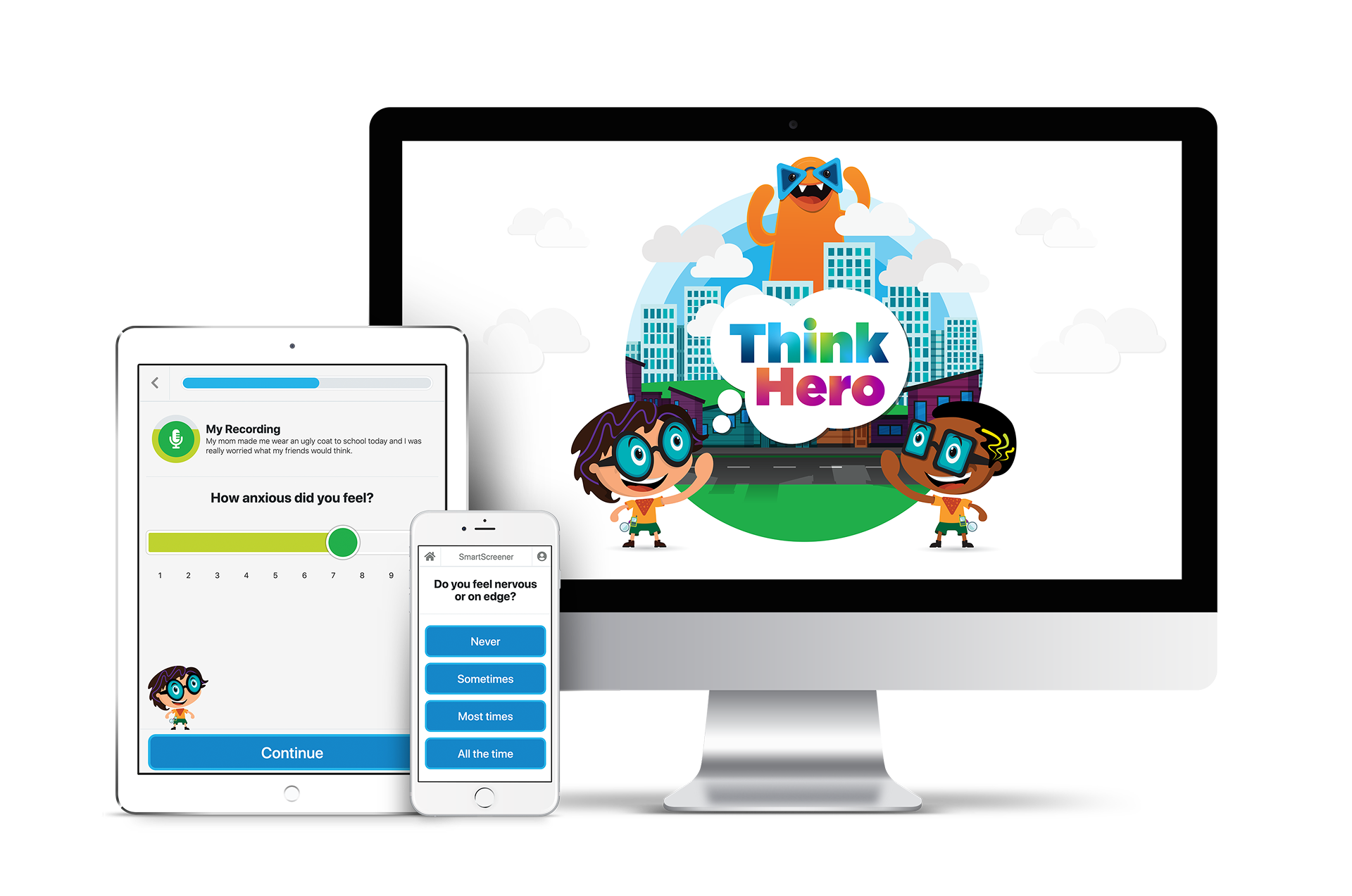
We created a mobile app to help kids and teens reduce symptoms of anxiety by engaging in clinical-based, educational videos, assessments and activities.

This case study generalizes data and internal details. Metrics are approximate and provided for illustrative purposes only.

Overview

My Roles

User Researcher, UI/UX Designer, Animator and Video Producer, Analytics Lead, and Frontend Developer

Our Team

Digital Directior of Innovation, Project Manager, Scrum and Development team, Clinical SME

Timeline

2 years (Research and design: 6 months, Implementation 6 months, 3 platform configuration and QA, Clinical Studies, 2 months, migration and launch 2 months)

Tools

Adobe XD for heuristic analysis and documentation, Excel and OneDrive for documentation,

Project Type

Strategic Service Design and Digital Transformation

Problem

Our team had just finished celebrating the success of our new digital platform that supported our adult populations when we were approached by a major hospital to create solutions to support children and teens in addressing general anxiety disorders. We knew we had a platform that could deliver adult assessments and online programs, but we knew these programs would have to be different if we wanted them to work for this new edge case.

We also had to create a brand new clinically, valid digital cognitive behavioral therapy (CBT) program by partnering with a practicing provider and expert in the area of families and anxiety disorders. Once this program was created, we would then have to convert it into an online experience that children and teens could do from home after their care visits.

The Business Problem

The primary issue was that 8% of children and teens struggle with anxiety and 40%pf parents struggle with stress and absenteeism stemming from concerns about their children's wellbeing. This was also during COVID19 during a surge in anxiety related issues, so we knew we had to act fast in order to alleviate the pressure in our patient's lives and our provider network.

The User Pain

Families, parents and guardians didn't know how they could support their children in challenging their behaviors and incentivise them to overcome their anxious feelings, thoughts and actions. We had to deliver a solution that aligned with our current capabilities, but also encouraged children and teens in using assessments and programs to help them with their problems in a relevant way. For this, we would need to conduct thorough market research on what these demographics would find engaging, but also in a way that would be fast and cheap to produce based on our budget and timeline.

Project Goals

The initiative set ambitious, strategic targets to optimize the service model:

  • Utilization: We aimed for children and teams assigned to the program to complete 1 of the 8 modules per week.
  • Outcomes: Our program aimed to reduce anxiety based symptoms by 20% after completing 3 modules.
  • Development: By leveraging our current platform, our goal was to re-use 80% of the current capabilities.

Approach

We partnered with a clinical subject matter expert in pediatrics and adolescents dealing with Generalized Anxiety Disorders (GAD) to outline the educational concepts, assessments and interactive activities that would be needed to guide children, teens, and their parent or guardians in understanding and overcoming symptoms of anxiety disorders.

Frameworks & Deliverables

We defined a framework based on in-person therapy practices that would enable virual, self-care for kids and their guardians:

  • Pscychoeducation: Identify educational concepts and topics to guide users in understanding how anxiety works and how it applies ot their life.
  • Assessments: Choose what assessments would be most helpful and complaint in tracking anxiety symptoms for users 5-17 years old
  • Program Activities: Define program structure with interactive activities that that would help overcome anxious feelings over time.
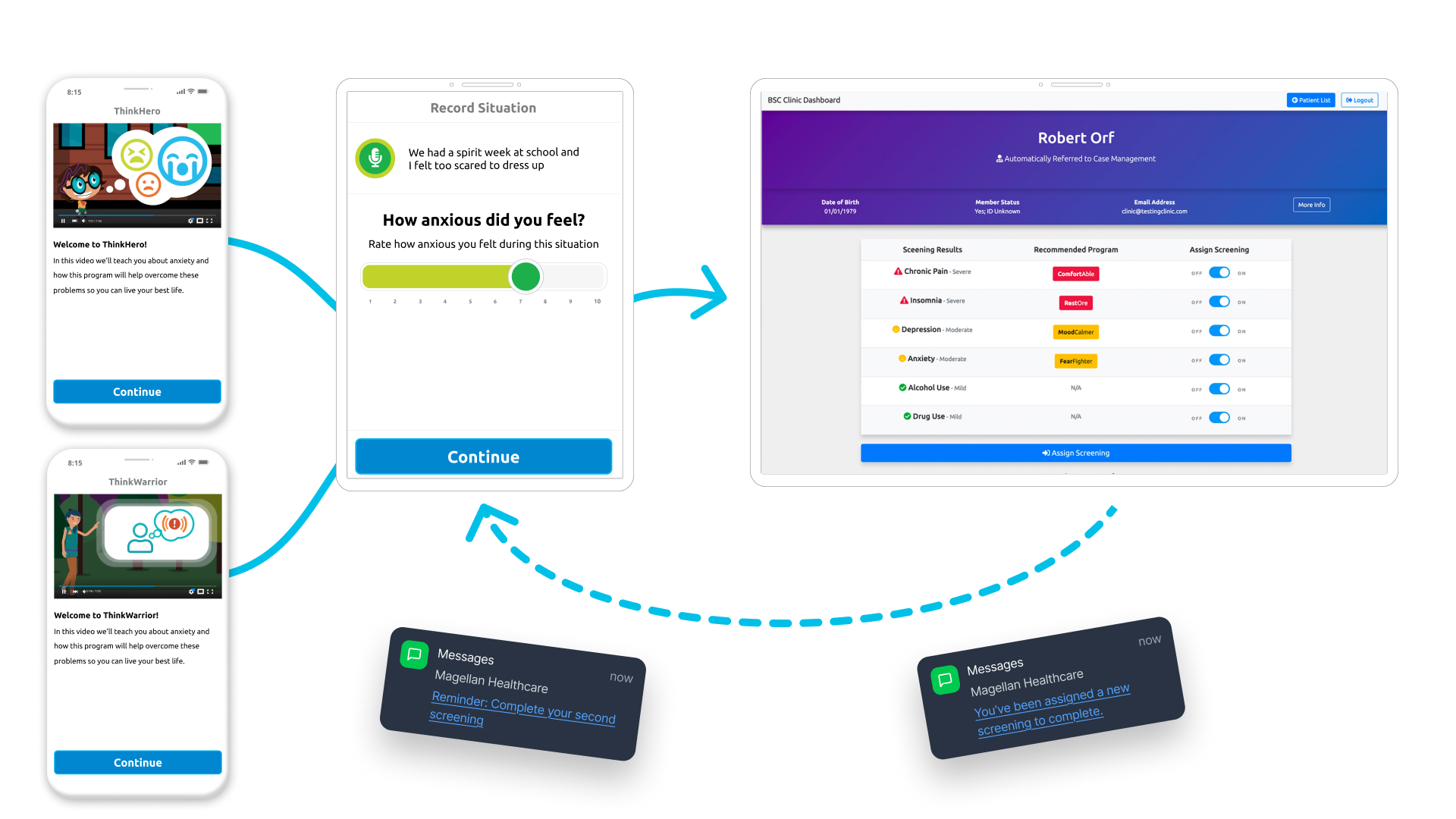
  • Work flows: We needed to ensure parents/guardians and clinicians could support and engage children and teens in the program.
  • Care Timeine: The program would need to be completed over 4 weeks with 4 weeks of re-curring activities to monitor outcomes.

Key Discovery Insight

Children and teens needed asssitance from their parents to support their mental health journey. For this to happen, we decided to integrate a Parent/Guardian experience that aligned with the children or teen's program so they were informed on what they were learning, and could provide helpful guidance and encouragement practices to better engage and support their child. We also found that the early illustration, and animation styles weren't aligning with our audiences preferenes so we had to iterate, and re-test with new animation technology and voice over tracks.

Cross-Functional Collaboration

After we had validated the program with both our clinical partners and end-users for usability and engagement, we needed to pitch the idea to IT and leadership for approval. We had a series of meetings with shared documentation including wireframes and prototypes, documentation for additional features needed to support the experiences, and educational videos on how the program would work to win everyone over.

From there, we led a series of development brainstorming sessions to identify scope, refine requirements, and prioritize iterations. I supported the scrum and development teams in creating the backlog of features, managing the digital platform configurations, and front end development on new features needed for the experience including accessibility enhancements for our younger populations.

Solution

The primary output of the conceptual design was 2 programs called ThinkHero (5-12 years old) and ThinkWarrior (12-17 years old) consisting of 9 modules that are intended to be completed 1 per week. Both programs included a program for the parent/guardian to complete with their child so they could support and engage them with the same educational information being shared in the child's program.

The Core Design

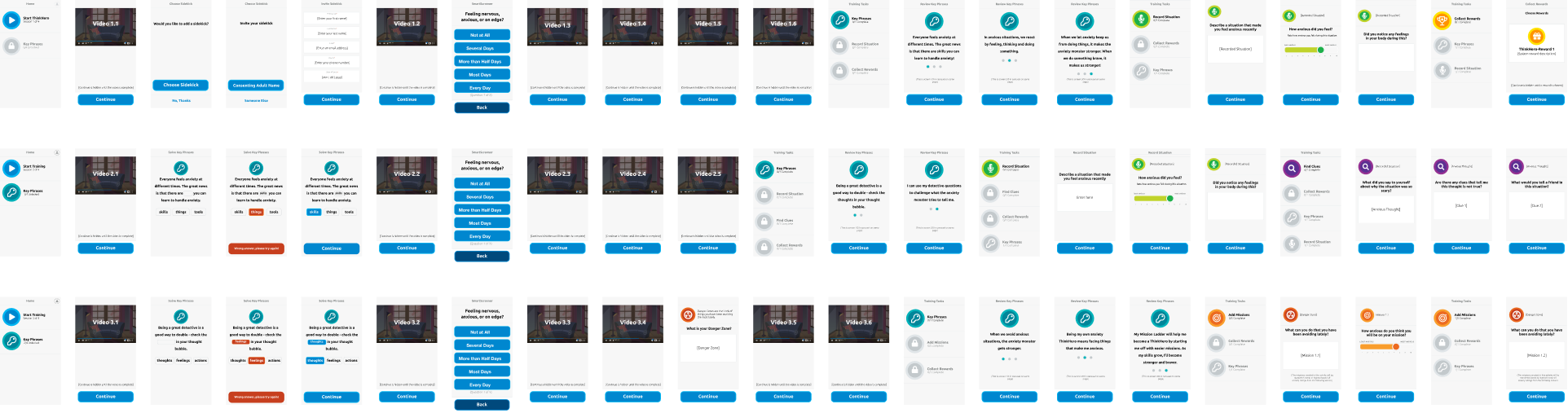
The strategic solution was to create a series of animated videos that supported children and teens in understanding the educational concepts with integrated assessments and key activities to ensure the users were understanding the presented learnings and would engage in digital activities to help overcome them.

Key Artifacts

The key artifacts were high fidelity prototypes and videos that could be tested with users to ensure the education was engaging, and easy to understand. Once understood, we had to ensure the activities were easy to use, and relevant to what children and teens were actively going through in their daily lives.

Measurable Improvement

By testing the prototype and videos with children and teens, we were able to identify areas of improvement in the deliver of our educational videos, and interactive activities.

Execution

After making updates to the program, we were able to implement the program by leveraging our existing clinical platform, but we did have to develop 5 new activities to support our application. We were able to produce all 4 programs and receive approval from our QA, Stakeholder, and client to move forward in clinical trials before introducing to the public.

View Promotional Video

Results

When the client couldn’t implement the solution and our partner migrated content to their portal, many interactive elements were lost—a tough moment because I believed in the original vision. But the partner’s platform offered stronger mobile experiences, integrated notifications, and better engagement tactics. In the end, more children and teens gained access to education, and outcomes improved. This taught me to embrace adaptability, prioritize impact over perfection, and see partnerships as opportunities for scale.

Utilization

50%of users completed 1 module per week. This was lower than we wanted from a clinical perspective, but it was still high from our benchmarked standards for digital adoption.

Outcomes

Our outcomes exceeded expectations—29% of ThinkHero members and 61% of ThinkWarrior members achieved a clinical reduction in anxiety symptoms. However, child populations lagged behind teens, and since we no longer managed the solution, we couldn’t investigate or optimize further. This reinforced the importance of ongoing data access and iterative design to understand user segments and continuously improve engagement.

Learnings

This project taught me the importance of balancing creativity with strategy. While I poured energy into crafting an ideal experience—learning animation, VFX, audio, and video production along the way—I realized early validation and lean execution could have accelerated impact. Still, the journey stretched my creative skills, deepened my understanding of healthcare complexities, and strengthened my ability to collaborate across diverse stakeholders.